
Klaus’s ending: a disappearance turns a friendship into a tradition
The final deliveries connect Jesper’s personal loss with a recurring act of generosity. Why the film leaves the mechanism open while making the relationship’s effect clear.
FilmFanatics Editorial · Published · View discussions
The ending confirms an effect more clearly than a mechanism
Klaus disappears, but the final Christmas experience suggests his connection with Jesper continues through the tradition they helped create. The film gives that continuation emotional clarity without explaining every physical or supernatural step. A literal rulebook is not the primary closure it offers.
Our reading is that the tradition preserves the friend's presence through an action that returns. The personal loss is not simply canceled. It becomes connected to something shared beyond the original pair, which changes the scale of the story.
Sources: 1
Guide · Sources checked
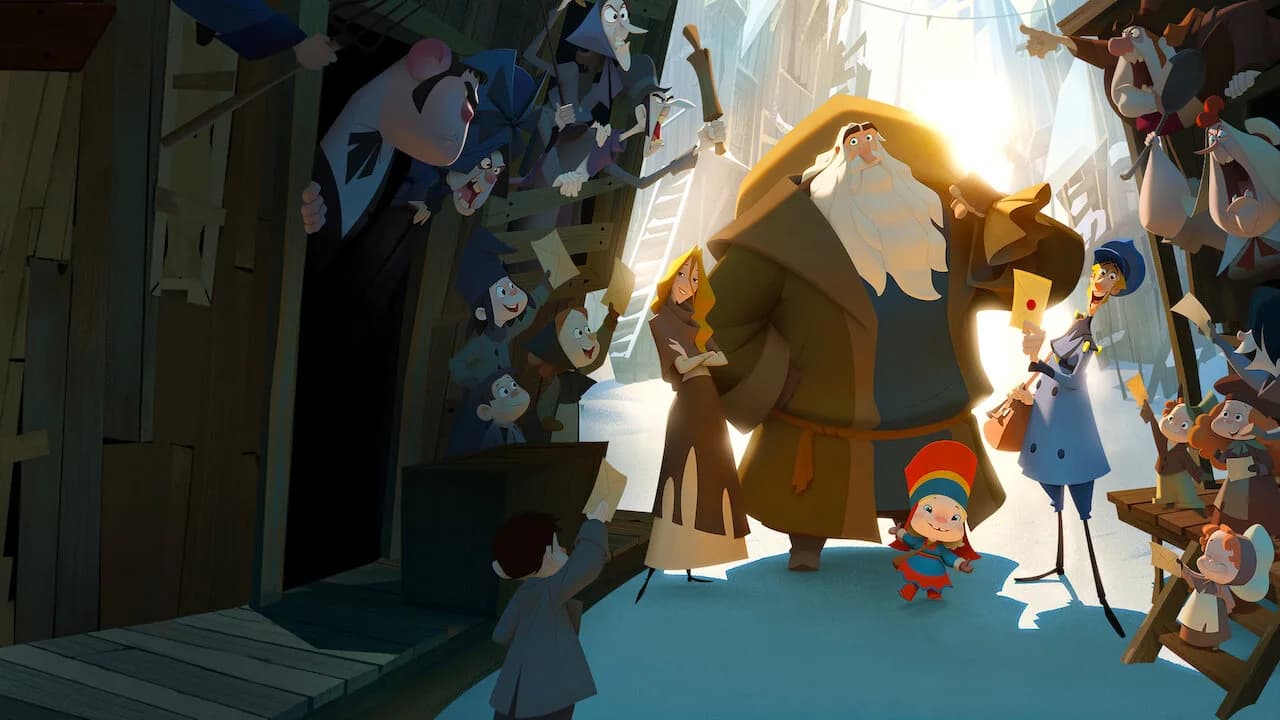
Generosity begins before magic has to explain it
The earlier chain of gifts and responses shows people changing their behavior through actions they can perform. The town's transformation does not wait for a supernatural solution to make every choice possible. That gives the final suggestion of magic a foundation rather than asking it to do all the moral work.
Jesper's motives also change through participation. An initially instrumental plan can lead to relationships whose value exceeds its original purpose. The ending matters because the work has become something he wants to continue, not merely a task that produces a reward.
The disappearance leaves room for different literal readings
A viewer may understand the final visits as a magical continuation, a story's way of representing memory or an invitation to hold both effects together. The film's emotional direction is firmer than a complete account of its mechanics.
The weakest explanation would ignore the disappearance entirely or invent a detailed process never shown. A strong reading accounts for both the loss and the recurring connection. It can acknowledge uncertainty without making the final scene meaningless.
Tradition is made of repeated attention
The gifts matter because somebody continues to notice other people. A tradition can become empty repetition, but the film frames this one through the relationships that gave it a purpose. The ending's return to Jesper makes that history personal again.
For discussion, identify an earlier action that changes how you understand the final delivery. Explain who acts, who responds and what becomes possible afterward. That connects the final magic to the film's human decisions instead of treating it as a detached surprise.
Sources
Discussions
New threadDoes Klaus need a literal explanation for its final visits?Spoilers
0 repliesLast post