
Nope’s ending: Em gets an image, but the film keeps the cost of looking in view
The final photograph resolves one objective. The ending also asks how proof, spectacle and family recognition differ—and which images the audience keeps wanting to possess.
FilmFanatics Editorial · Published · View discussions
The photograph completes an objective, not every argument
Em obtains the image she has pursued through the climax. That resolves the practical problem of producing a form of proof. It does not automatically settle the film's broader question about wanting to capture, own or profit from a dangerous spectacle.
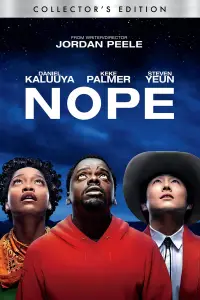
Our reading is that achievement and implication coexist. The audience can celebrate her resourcefulness while asking whether any successful image fully escapes the system of looking the film has been examining.
Sources: 1
Guide · Sources checked
The device makes attention and timing concrete
The final photographic action depends on a physical procedure rather than a vague wish for evidence. The viewer can follow an objective, a limited opportunity and a result. That clarity gives the image force as an action Em performs.
It also contrasts with other attempts to turn an encounter into a controlled show. The film repeatedly tests whether understanding an animal or spectacle as manageable is the same as respecting what it can do. Confidence is not proof of control.
The final personal image has another function
The view associated with OJ can offer recognition that is not reducible to the public value of the photograph. A family relation and an image for outside consumption answer different needs. The ending becomes flatter if both are treated only as trophies of success.
Where a detail of the final image remains open to interpretation, identify that uncertainty rather than turning a preferred reading into an undisputed event. A theory should explain the framing and the preceding action, not simply replace them.
The spectator is part of the question
The film gives viewers compelling sights while making the wish for an ultimate image increasingly difficult. That does not mean enjoying the film invalidates the argument. It makes the tension between attraction and judgment part of the work.
For discussion, compare one earlier controlled spectacle with Em's final procedure. What is understood differently, and what desire remains? A specific comparison can acknowledge the ending's pleasure without pretending the photograph supplies a complete ethical escape.
Sources
Discussions
New threadDoes Em’s final photograph escape Nope’s spectacle problem or remain inside it?Spoilers
0 repliesLast post