
The Truman Show’s ending: the door offers uncertainty rather than another perfect world
Truman rejects a controlled life whose safety depends on withheld knowledge. His exit does not promise an easy future; it makes choosing that future possible.
Truman chooses the right to encounter what is not arranged for him
The exit does not reveal a perfect outside world. It gives Truman the possibility of a life that is not secretly organized as somebody else's production. Christof's promise of safety cannot answer the problem of consent and withheld knowledge on which the programme depends.
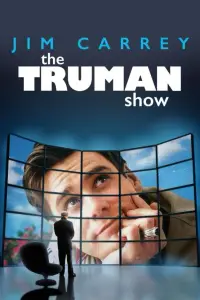
Our reading is that the ending makes uncertainty part of freedom rather than a defect that must be removed before he can leave. A difficult future can still be different in kind from a carefully controlled present he never knowingly chose.
Guide · Sources checked
Familiar care is compromised by its conditions
The programme has supplied routines and relationships that feel meaningful to Truman. Their emotional reality for him does not make the hidden arrangement acceptable. The ending does not require viewers to believe that every feeling was false in order to recognize the manipulation.
That distinction complicates Christof's position. A person can describe their control as protection while remaining unwilling to let the protected person choose its terms. The benevolent language and the coercive structure should be evaluated together.
The final performance changes who controls the gesture
Truman's familiar public manner becomes part of an exit he chooses. A gesture the programme has made recognizable can now mark the limit of its access. He does not need to become an entirely different personality to act outside the production's plan.
The door is important because crossing it ends the camera's account rather than beginning a complete reassuring epilogue. The film allows his future to stop being something the audience possesses in full.
The viewers’ reaction complicates the victory
The television audience can celebrate the exit and then turn its attention elsewhere. That response supports the emotional release while exposing how quickly an extraordinary life can become another finished programme. Truman's freedom and the spectators' consumption are not the same achievement.
For discussion, ask what the film refuses to show after the door. Does that limit protect Truman's future, frustrate the audience or both? The ending becomes more precise when its uncertainty is treated as a deliberate relation rather than a missing scene somebody must invent.
Sources
Discussions
New threadWhy is an uncertain world preferable to Christof’s offered safety at the end?Spoilers
0 repliesLast post