12 12 12 tells a Zurich heist across the plan, the job and its aftermath
Apple’s Anthony Mackie and Jamie Dornan drama releases one new episode a week through December 25.
News analysis · Reporting checked
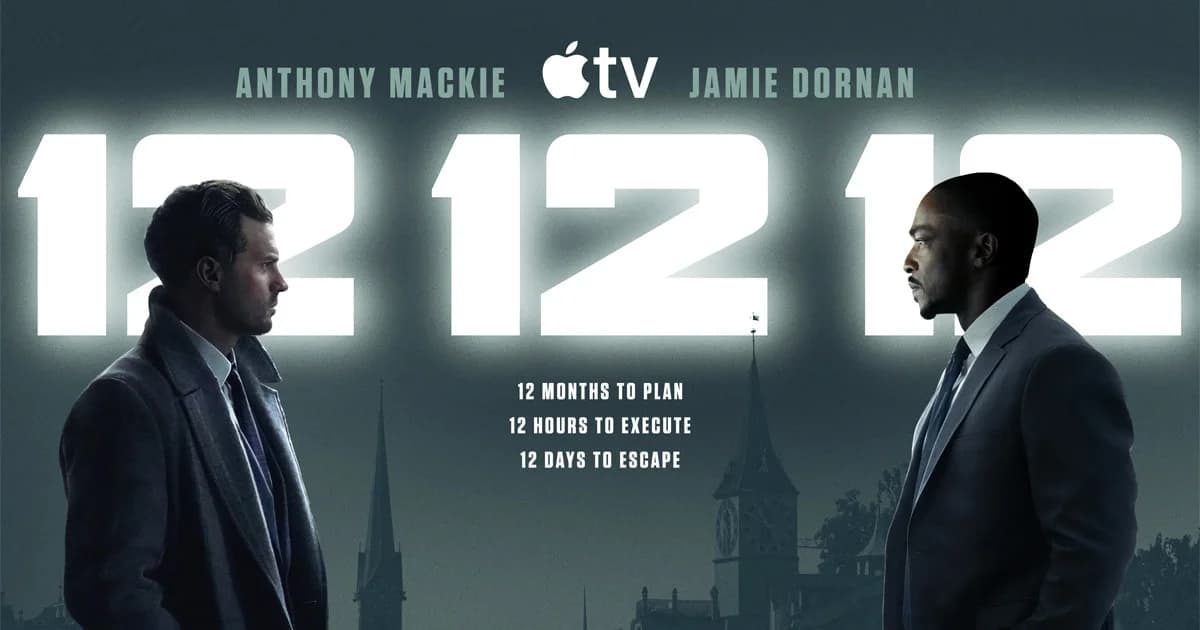
Apple began the eight-episode series with two episodes on November 13, followed by weekly episodes. The story centers on a Zurich vault raid, with Mackie playing an FBI agent and Dornan playing a career criminal. Each episode visits the preparation, the operation and the aftermath.
Three timelines work when each answers a different question
Preparation shows what the characters expect. The job shows which expectations break. The aftermath shows which of those breaks matter. Cutting across all three can make a minor planning detail feel important without having to pause later to explain it.
It is a demanding structure for a weekly viewer. One clear anchor in each timeline can do more than a long recap. A location or a change in an alliance may orient us faster than a number on the screen.
Suspense changes when the outcome comes first
Showing an aftermath early can remove one uncertainty while creating another. Knowing that a character survived does not explain whom they abandoned, what they believe happened or why an investigator accepts their account. The structure becomes productive when an answer in one period changes the question being asked in another. Simply withholding the missing middle would give viewers a puzzle, but less reason to care about its participants.
The announced twelve-month, twelve-hour and twelve-day spans also describe different kinds of pressure. A plan can absorb revisions over months; an operation may force an irreversible choice in seconds. The aftermath offers time to justify that choice. Comparing those three versions of a person is a more substantial reward than discovering that a seemingly incidental object was important all along.
Keep a theory separate from the episode’s evidence
A practical way to follow the weekly story is to record a claim, the period in which it appears and who supplies it. A character saying that the plan required an action is different from the episode showing that action being agreed. This distinction leaves room for an unreliable account without treating every unexplained detail as an error. It also makes competing theories easier to discuss.
For example, an apparent contradiction might come from a changed intention rather than a continuity mistake. Before resolving it, ask whether the scenes show the same person at the same stage of knowledge. That is an analytical possibility, not a report of a particular twist. Apple’s announcement establishes the format and schedule; judgments about whether individual transitions are fair need to point to the episodes themselves.