
Audio description on Happy Gilmore 2 and Stranger Things shows why timing is part of accessibility
Netflix’s account of its description teams highlights choices about words, silence and performance. Good access preserves the moment of discovery rather than merely listing what is visible.
News analysis · Reporting checked
The craft behind the tracks
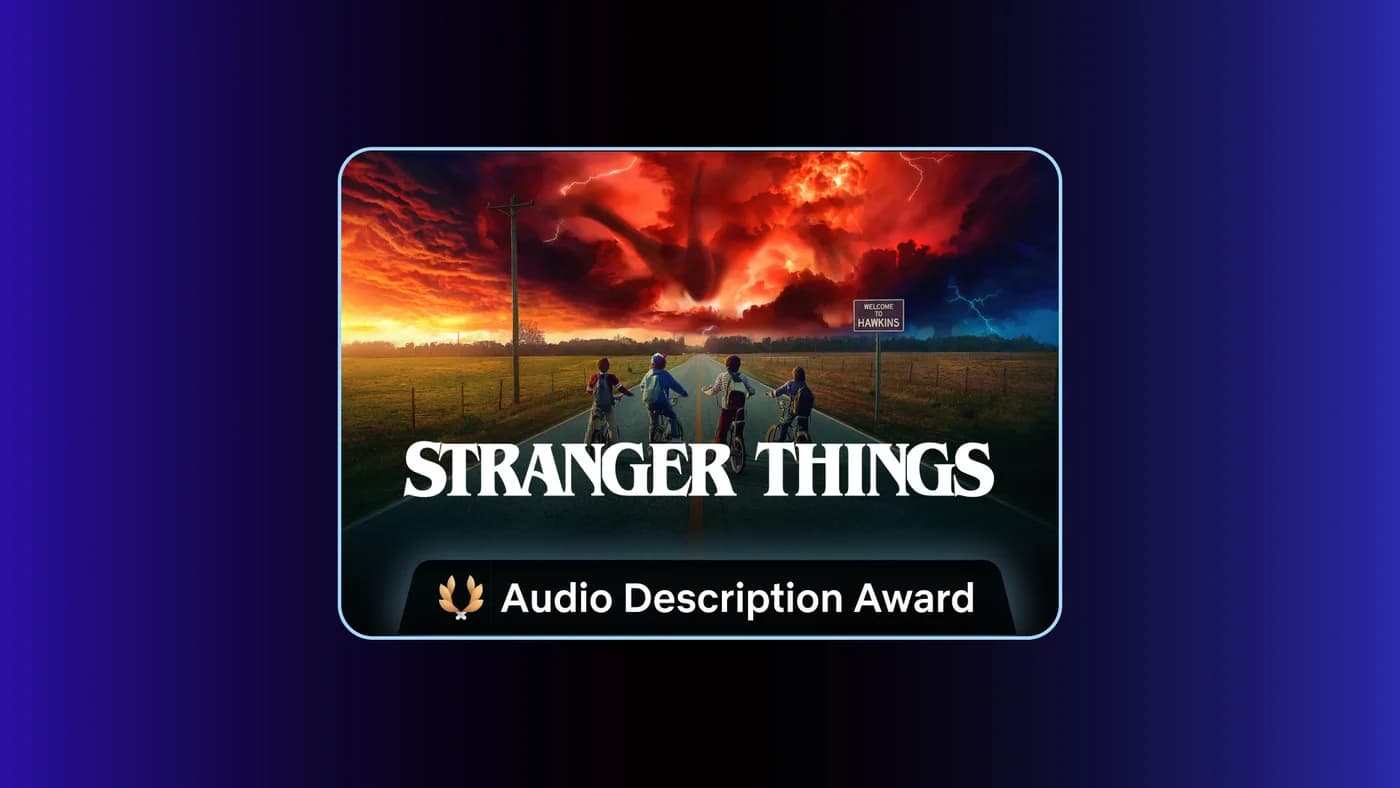
Netflix’s November 13 feature discusses audio-description work on Happy Gilmore 2 and Stranger Things season five, naming Descriptive Video Works and International Digital Centre among its partners. It describes writing, narration and review as parts of the process. That account provides an occasion to consider audio description as an interpretation of timing, rather than an automatic transcript of images.
Describing a joke should not explain it before it lands
Physical comedy often depends on the audience recognizing a change at a particular instant. Naming the outcome too early can remove the surprise; naming it too late can detach it from the reaction that makes it funny. The writer needs to choose not only what matters but when the listener should be allowed to know it.
Dialogue creates a practical limit. A description cannot simply occupy every available moment without competing with speech, music and sound effects. Sometimes a precise verb can preserve an action more effectively than several descriptive clauses. Sometimes silence is necessary because another part of the soundtrack already supplies the information.
Suspense depends on the same discipline
A frightening image may be visible to the audience before a character notices it. Description needs to preserve that relationship rather than automatically align every listener with the character’s knowledge. The opposite can happen too: a character sees something the camera withholds. Stating more than the image reveals would change the scene’s design.
Consistency across a series adds another responsibility. A repeated description can help listeners recognize a returning place or creature, while a changed word can suggest a distinction that may not exist visually. The vocabulary becomes part of continuity. It should be chosen with the same care as a recurring visual motif.
What a useful comparison sounds for
Try one scene with the track enabled and consider what each added phrase contributes. Does it identify a necessary action, preserve a joke or help locate an exchange? Does it leave room for the original sound? The goal is not to make every viewer experience a scene identically, but to provide the information needed to follow its construction. That is creative work with consequences for the story’s rhythm.
Sources
Discussions
New threadNo discussions yet.