
The Good Boss arrives December 2, moving workplace satire into a six-episode series
Luca Zingaretti leads the Italian adaptation. A longer format can show how a boss’s habit of fixing everything becomes a problem other people must live with.
News analysis · Sources checked
The release and source
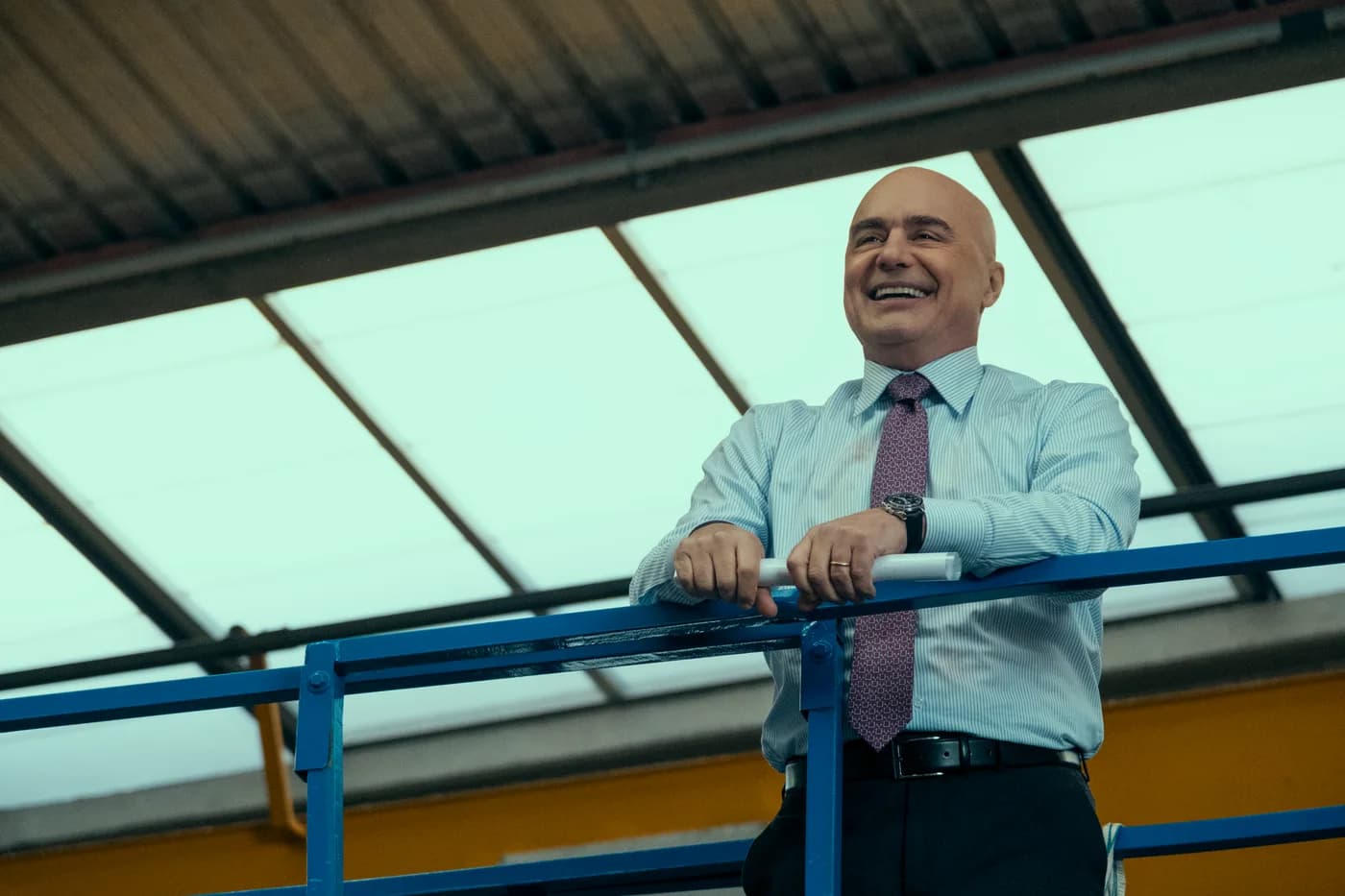
Netflix has scheduled The Good Boss for December 2, 2026. The Italian series stars Luca Zingaretti as factory owner Giulio Zagni and runs for six episodes. It is based on Fernando León de Aranoa’s film El Buen Patrón. Roan Johnson directs the first three episodes and Niccolò Falsetti the final three. The announcement defines the adaptation’s framework without establishing how closely individual scenes follow the film.
What six episodes can add
A feature can concentrate on a crisis; a series has more room to show the habits that make the crisis possible. Repetition becomes useful when a familiar intervention produces a different cost for someone else. The viewer can begin to recognize a pattern before the lead admits it, creating comedy through anticipation rather than simply through surprise.
The longer format also needs other characters to have goals that survive the end of a scene. A family member’s objection should matter after a business emergency interrupts it. A worker’s problem should not disappear once it has exposed the boss’s hypocrisy. Those continuities would justify expanding the source into a shared world rather than stretching its central joke.
How to compare the two versions
Choose one kind of intervention and examine whose perspective organizes it. Does the series give a person affected by Giulio’s decision more time or a different response? That is a concrete way to discuss adaptation. It avoids assuming that a longer running time automatically means greater depth, while leaving room for the new version to discover something the original format did not pursue.
Sources
Discussions
New threadNo discussions yet.