
Netflix reports a decade of Australian production impact, with several measures worth keeping separate
The company’s Australian account combines economic contribution, employment and viewing. Each describes a different part of the screen industry’s relationship with a platform.
News analysis · Reporting checked
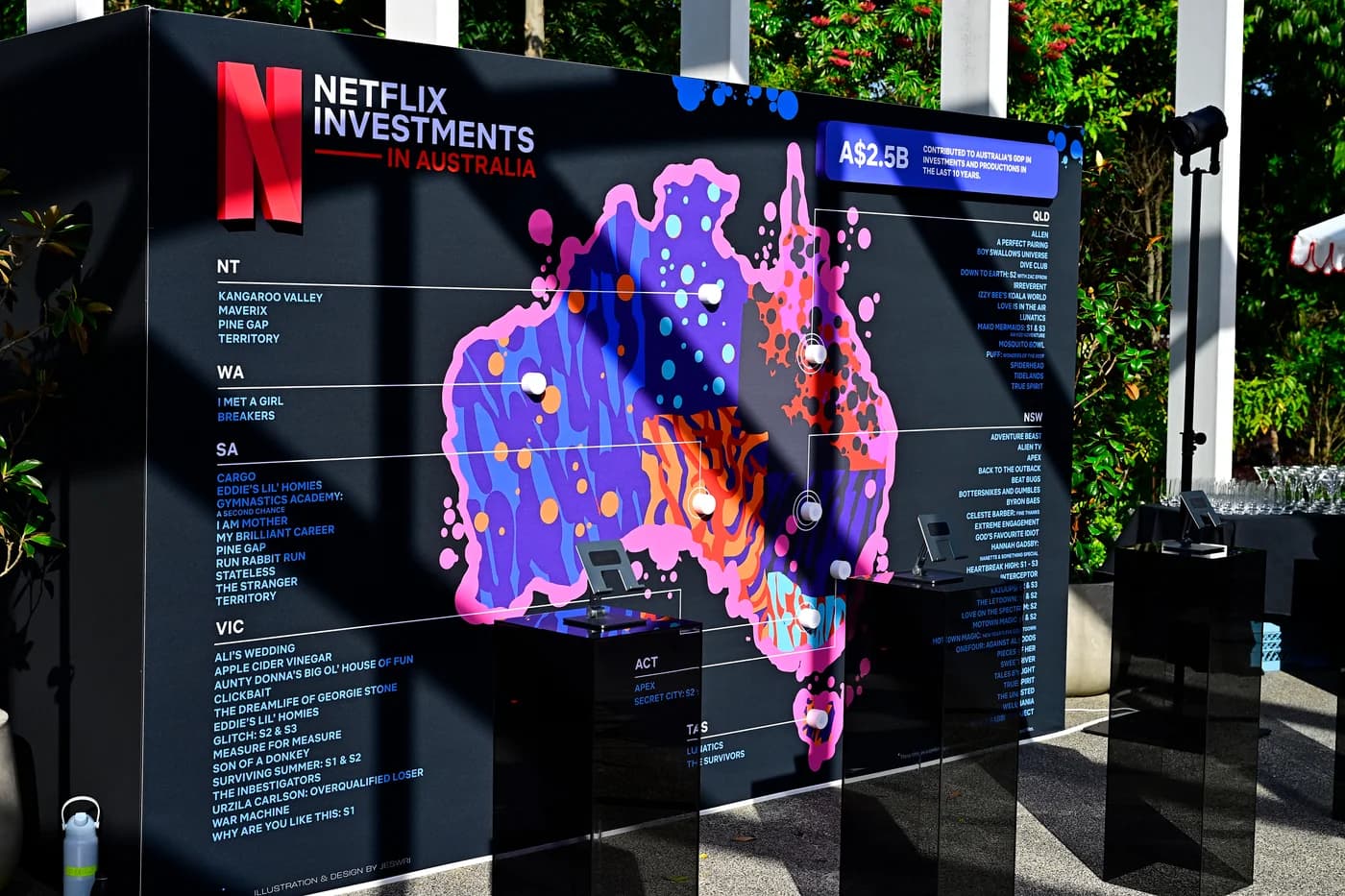
The company’s reported scope
Netflix says its Australian investment and productions contributed more than A$2.5 billion to GDP from 2016 through 2025. Its November 19 account also says Australian content generated more than 1.2 billion worldwide viewing hours in 2025. These are company-reported measures for different periods. GDP contribution should not be relabeled as direct production spending, and viewing hours should not be relabeled as individual viewers.
A production has effects beyond its cast list
A location shoot can purchase services from businesses that are not usually identified with filmmaking. That makes local impact broader than the number of performers in a programme’s credits. It also makes comparison more difficult: a total can include different kinds of work and duration. A useful analysis asks what is counted before treating the headline as a complete measure of employment.
Temporary work and continuing capability are related but distinct outcomes. A shoot may provide immediate income, while training, repeat commissions or a new business relationship can affect what happens after it leaves. Evidence for one does not automatically establish the other. The most informative account would follow whether people can use the experience on a later production.
Global viewing does not require a story to become placeless
A local setting can make a drama easier to enter when its practical details explain relationships clearly. Work, language and geography give people reasons to act; removing them may make a story more generic rather than more accessible. The question is how a film or series introduces those details to someone unfamiliar with the place.
Distribution creates an opportunity for that encounter, but availability and discovery remain separate. A title can exist in a large catalog without reaching the people most likely to value it. Viewing figures therefore describe one outcome of production and presentation together. They do not isolate which element produced the response.
What to ask next
For industry discussion, request definitions and time periods before comparing totals. For viewers, use the report as a reason to investigate Australian work while judging each title on its own construction. The company’s account establishes how it presents its contribution. A fuller assessment would combine that perspective with independent production, employment and audience evidence rather than asking one set of figures to settle every question.
Sources
Discussions
New threadNo discussions yet.