
Santana’s 2027 U.S. dates: listen beyond the lead guitar
Planet of Free Will has a confirmed North American run. A more revealing way to discuss the show is to follow the rhythmic conversation that gives the guitar its space.
News analysis · Reporting checked
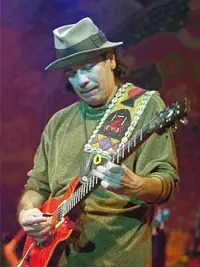

A U.S. announcement distinct from the European leg
Santana’s official site announces new U.S. dates for the Planet of Free Will Global Tour 2027, with North American performances extending into Canada. The official tour calendar is the place to verify a particular stop. An earlier European announcement belongs to another portion of the itinerary and should not be used as proof of a U.S. date.
The U.S. announcement names November 20 as its original general-sale date. That deadline has passed as of this article’s November 25 check. We are not turning the old announcement into a fresh presale alert or claiming current ticket availability. The useful question now is what a listener should pay attention to when comparing the band’s live presentation.
| 2027 date | Place | Venue |
|---|---|---|
| February 23 | Highland, California | Yaamava’ Theater |
| April 6 | New York, New York | Radio City Music Hall |
The guitar’s freedom depends on the surrounding parts
A prominent lead instrument can make the rest of an ensemble disappear from casual discussion. Listen instead for the framework around it: a rhythmic figure that stays steady, a bass movement that redirects the harmony or a percussion entrance that changes the feeling of the pulse. The lead line’s apparent freedom often becomes more interesting when you hear the choices supporting it.
This is not a claim about a specific 2027 arrangement. It is a listening method that can be tested against a released recording or an actual performance. Rather than asking whether a solo is simply longer or faster, ask how it responds to the band’s changes. Length alone does not tell us how an improvisation develops.
Repetition can be a source of motion
A recurring pattern need not make a performance static. Small changes in emphasis, spacing or instrumentation can alter how the same figure feels. The listener begins to anticipate a return, then hears a variation against that expectation. Concert accounts become more precise when they describe one such change instead of using “groove” as a word that explains everything by itself.
Film music offers a useful analogy. A repeated motif can carry a different emotional meaning when the image or harmony around it changes. In a band performance, another player can supply that new context. Paying attention to those relationships makes an ensemble easier to discuss without pretending that every musical decision originates with the person at the front.
What a newcomer can bring to the conversation
You do not need to identify every technical term to describe a convincing exchange. Say which part first caught your attention, what another player changed and whether the lead responded. Another reader can use that account to listen again. Specific observation is more valuable than a list of superlatives or a claim that an entire evening was “effortless.”
Our analysis frames the announced tour as an opportunity to hear a band, not merely collect an encounter with a famous name. Fans who attend can strengthen the discussion with a date and a concrete musical example. The official sources settle the itinerary; audience interpretation should explain what happened within it.
Sources
Discussions
New threadWhich supporting part changes the way you hear a guitar solo?
0 repliesLast post