
Slumberkins season two returns in February with puppetry, animation and difficult feelings
The new season’s announced subjects include disappointment and perfectionism. Its storytelling challenge is letting feelings develop before a lesson resolves them.
News analysis · Reporting checked
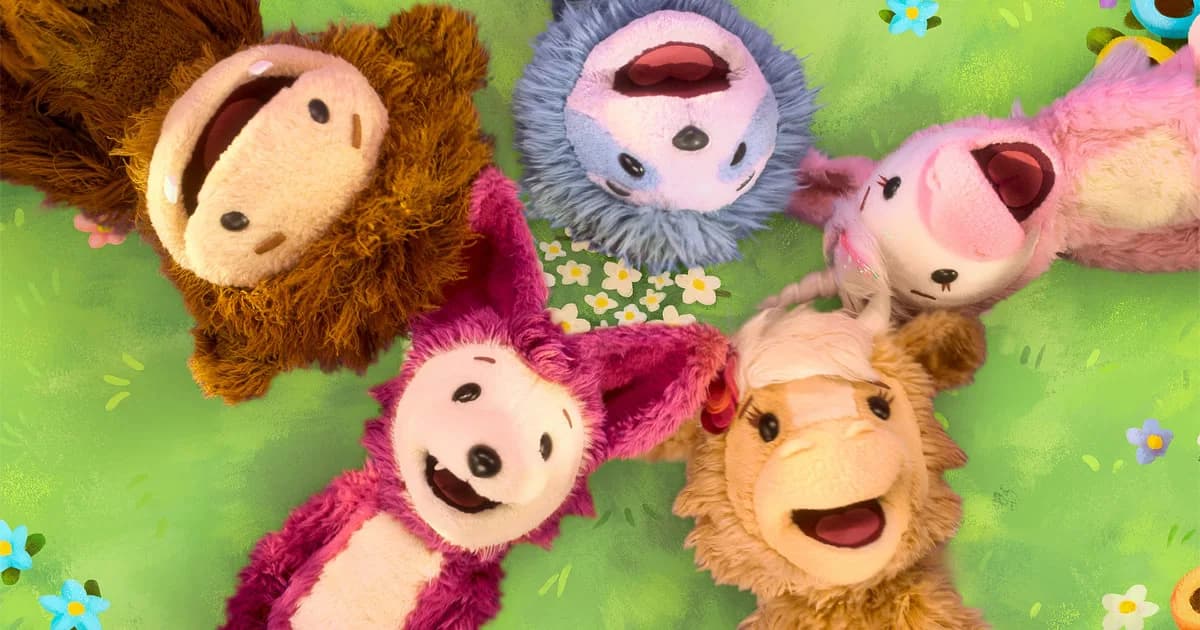
Nine new episodes are scheduled
Apple announced February 5, 2027, for the second season of Slumberkins, with nine episodes from The Jim Henson Company. The preschool series combines puppetry with 2D animation. Apple identifies disappointment, self-doubt, friendship, perfectionism, family dynamics and grief among the season’s subjects. Alex Rockwell created the television adaptation, with Ingrid Michaelson serving as executive music producer.
A feeling needs a story before it needs a label
The most useful dramatic question is how long the show allows a character to experience uncertainty. Naming an emotion can help a viewer follow a scene, but a label is not the same as an explanation. A child character who wants to do something perfectly needs a particular task, a reason it matters and a reaction when it goes wrong. Without those details, perfectionism becomes an abstract word rather than a recognizable predicament.
Friendship gives that predicament consequences. A character may be ashamed of a mistake that another character barely noticed, or reject help because accepting it seems like another failure. These are possible ways to dramatize the announced themes, not descriptions of scenes already confirmed. They provide a practical test for whether an episode lets its characters make choices rather than merely illustrate advice.
Why the mixed format is worth watching
Puppetry can make a gesture or a pause feel physically shared: a character occupies a space, turns toward another figure and waits. Animation can change scale, movement or perspective more freely. A mixed format has the opportunity to distinguish an outward event from a character’s imaginative response without relying entirely on narration. The interesting question is whether transitions between forms clarify that difference.
Songs can play a similar role. Repetition may give a young audience time to recognize an idea, while a change in a repeated line can mark a character’s progress. The important distinction is between repeating reassurance and showing why a new response has become possible. Music should support that movement rather than erase the conflict as soon as it appears.
A viewing lens for adults watching alongside children
Notice who offers comfort, whether the upset character can disagree and what remains unresolved at the end. Those observations concern the construction of the story; they are not a claim that the programme delivers a particular developmental outcome. The announcement establishes themes and format, while the episodes will have to demonstrate how thoughtfully those elements work together.
Sources
Discussions
New threadNo discussions yet.