
The Terminal List’s second season adapts True Believer and asks what follows a completed mission
Chris Pratt returns as James Reece. A continuing action story needs a new purpose that develops the first chapter’s consequences rather than merely replacing its target.
News analysis · Reporting checked
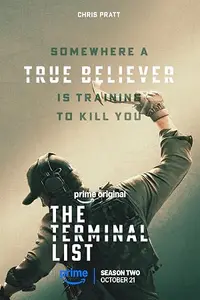
The adaptation’s next source
Amazon’s second-season account identifies Jack Carr’s True Believer as the source for The Terminal List’s continuation. Chris Pratt returns as James Reece, with David DiGilio as showrunner. The source describes Reece seeking a new purpose after completing his list. This analysis concerns that transition and the announced production framework, not the verification of real military operations or the disclosure of the season’s final outcome.
Finishing an objective does not supply a future
An action story can organize a character’s life around a list of tasks. Completion removes that structure as well as resolving it. A continuation becomes more interesting when it recognizes the absence: what does the character choose when the old objective no longer tells him where to go? Another conspiracy can provide movement, but it should not erase that question.
A new purpose also needs to be distinguished from a new justification for familiar behavior. The audience should be able to recognize a change in how Reece evaluates information, accepts help or treats someone outside his immediate circle. Otherwise, the continuation may change the scale while leaving the underlying decision untouched.
Technical detail and moral clarity are different achievements
The production account emphasizes the involvement of people with military experience. Such expertise can inform practical behavior and the coordination of an action scene. It does not automatically settle the story’s moral argument. A convincing procedure can still serve a decision the audience should examine.
That distinction lets a discussion appreciate craft without treating authenticity as a blanket endorsement. Ask whether the sequence makes objectives, limits and consequences clear. Then ask whether other characters have a meaningful opportunity to challenge the central decision. Both questions concern what appears on screen; neither requires guessing at the private intentions of the people who made it.
A useful question for a continuing thriller
What does the second season allow Reece to reconsider that the first chapter’s urgency kept him from questioning? A specific answer would show development beyond another dangerous assignment. The novel provides a route forward, while the television adaptation has to make that change visible through choices and relationships. That is where a continuation can earn its additional time rather than simply demonstrate that the character can survive another plot.
Sources
Discussions
New threadNo discussions yet.