
TRON: Ares and Nine Inch Nails: score, soundtrack and the sound of a digital world
The band’s film credit is confirmed. The more revealing discussion concerns what electronic texture does to an image—and why a soundtrack album and a film cue are different listening experiences.
News analysis · Reporting checked
Start with the actual music credit
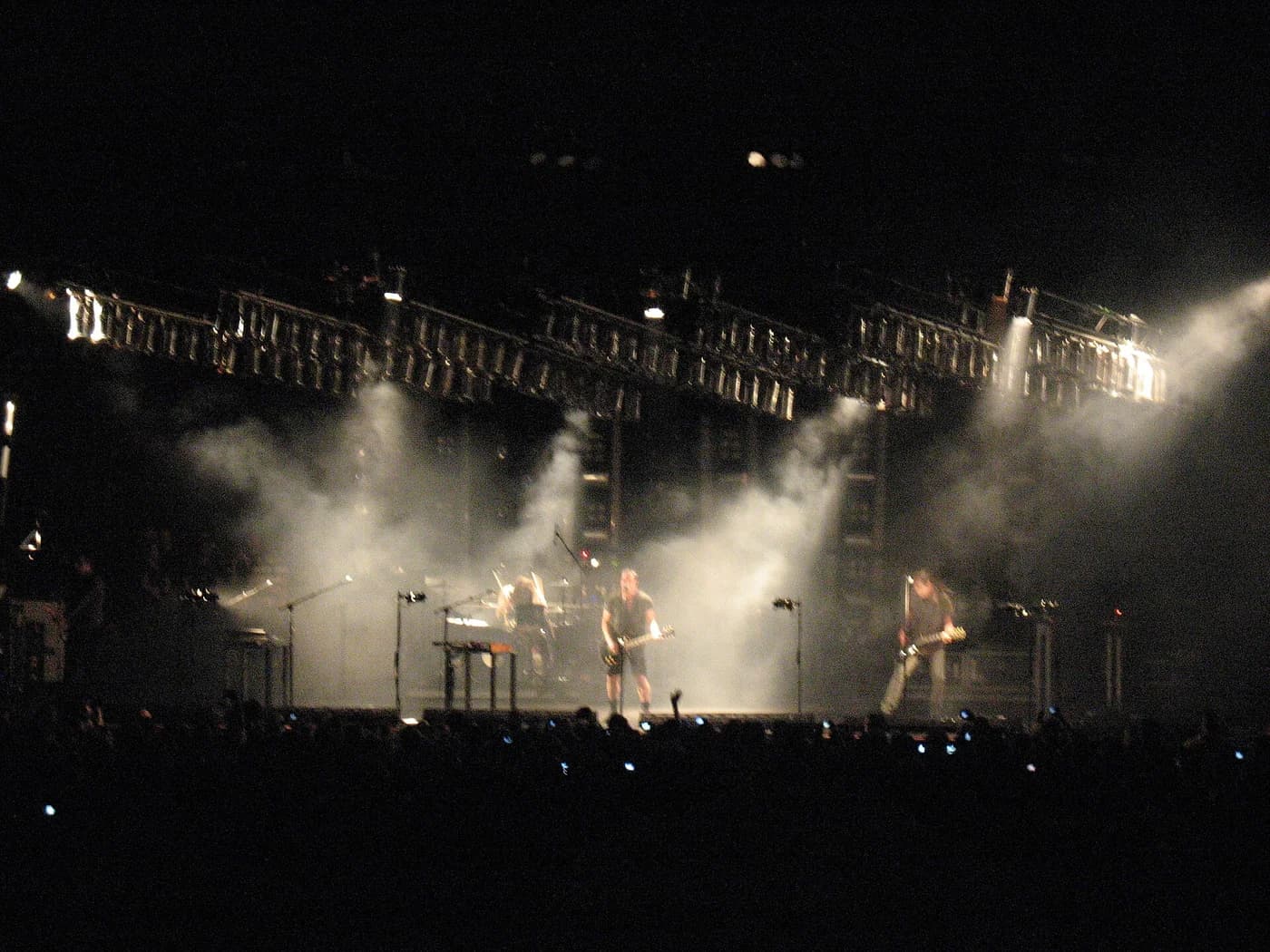
Disney’s TRON: Ares materials credit Nine Inch Nails with the film’s music, and its production notes identify the original motion picture soundtrack. The band name matters to the way the project is presented. It should not be confused with a claim that every other score by Trent Reznor and Atticus Ross was released under the same credit.
The official synopsis places the program Ares on a mission from a digital world into the real one. That premise supplies a useful starting point for listening: a film about crossing between environments has to make those environments feel related and different. Music can participate in that distinction without simply labeling one world “electronic” and the other “human.”
Texture can organize the image
A sound can suggest weight, friction or instability before a viewer has a technical name for it. Repetition may make movement feel mechanical; a distortion or break can make a stable image feel threatened. The useful question is not whether an electronic score suits a digital setting in a broad way, but what a particular change in sound makes you notice about the action.
Consider where a cue places its attack and its release. Does it reinforce an impact, anticipate it or continue across a cut so that two spaces feel connected? Those are different dramatic functions. Calling the music “intense” may describe your reaction, but explaining one relationship between sound and image gives another reader something to evaluate.
An album track and a film cue have different surroundings
On an album, a piece is heard beside other pieces and within a listening environment the audience controls. In a film, dialogue, sound effects and editing share the same time. Music that feels self-contained in isolation may serve as a supporting layer in a scene. Neither presentation is the definitive test of the other.
This is why a soundtrack discussion should identify the version being considered. Are you assessing a track’s musical progression, the placement of a cue within a sequence, or the balance between music and effects? A viewer can admire one of those things and question another without contradicting themselves.
A more useful comparison with other TRON music
Instead of ranking entire soundtracks by atmosphere, choose a comparable task: introducing an environment, sustaining pursuit or making a transition between spaces. Describe the musical choice each work uses to solve it. That lets the comparison recognize different artistic aims rather than treating difference from an earlier score as a flaw by definition.
TRON: Ares is a productive discussion subject because its imagery and music invite viewers to think about constructed worlds together. The strongest thread will name a cue or a scene and explain the relationship. The verified credit establishes who made the music; whether that music gives a particular image force is an interpretation the discussion can test.
Sources
Discussions
New threadWhich TRON musical cue changes meaning when heard outside the film?
0 repliesLast post