
VisionQuest’s Vision and Ultron pairing turns identity into an argument between voices
Disney’s production feature describes memories and competing AI personas. The dramatic opportunity is to show why an explanation becomes persuasive to the person hearing it.
News analysis · Reporting checked
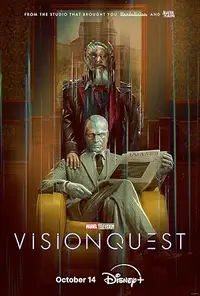
The production feature’s starting point
Disney’s October production feature describes Paul Bettany’s rebooted Vision confronting memories and AI personas, with James Spader returning as Ultron. It frames the series around questions of identity and inherited influence. The discussion here concerns that premise and the actors’ described relationship, rather than retelling the finale or presenting a theory as a confirmed answer.
An internal voice becomes a scene partner
Putting competing explanations into different voices lets an audience hear a choice being formed. The technique is strongest when each voice has a recognizable way of persuading, not merely a different tone. One may appeal to efficiency, another to loyalty or fear. The character listening can then reveal himself through what he finds convincing.
The danger is turning a difficult question into a diagram where the correct voice is obvious. A persuasive influence should offer something the listener actually needs. Rejecting it then has a cost. If the cost disappears as soon as the hero chooses well, the story has described temptation without making its force believable.
Memory does not settle responsibility
A person can remember an event without sharing the priorities of the person they once were. Equally, claiming to have changed does not erase what others experienced. A drama about a reconstructed identity has room to hold those propositions together. The question is not only whether Vision’s memories are his, but what he decides to do with their effect on other people.
Performance can keep that question concrete. A pause before using a familiar name, or a change in how a reply is heard, can make uncertainty visible without an explanatory monologue. A scene should let the audience follow the practical relationship even when the underlying nature of memory remains unresolved.
A comparison that goes beyond a familiar villain’s return
Ask what Ultron can say to Vision that another character could not. If their shared history changes the pressure of an argument, the pairing has a dramatic purpose beyond recognition. If their exchanges could be moved unchanged to any antagonist, the continuity is doing less work. That gives a specific way to evaluate the series’ use of its past without treating an appearance by a returning character as an achievement by itself.
Sources
Related coverage
Discussions
New threadNo discussions yet.