
Summer of Soul: why recovering a concert is also a question about history
Questlove’s film connects the 1969 Harlem Cultural Festival to memory and public recognition. The music matters, but so does the way the archive is introduced and interpreted.
News analysis · Reporting checked
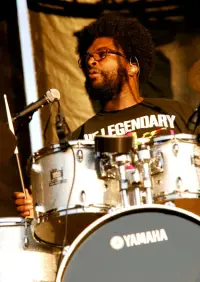

The event at the center of the film
Searchlight describes Summer of Soul as Ahmir “Questlove” Thompson’s documentary built around the Harlem Cultural Festival, filmed over six weeks in 1969 at Mount Morris Park, now Marcus Garvey Park. Those details locate a specific event. They also keep it distinct from the better-known Woodstock festival rather than using one famous name as a substitute for the other.
The film is not merely a recovered setlist. Its larger subject concerns what happens when a performance exists on film but does not occupy a proportionate place in public memory. That is a question about circulation, recognition and context. The footage matters both for the music it preserves and for the history a later audience is invited to reconsider.
An archive does not explain itself
A performance image can be vivid and still leave a viewer unsure of its significance. Documentary framing supplies relationships: between a person remembering an event and the recorded image, between the crowd and its surroundings, or between a song and a broader social moment. Those relationships turn material into an argument without making the material interchangeable with the argument.
Watch for the point at which context changes how a passage is heard. A viewer may first respond to the force of a performance, then return to it with a different understanding of what the gathering meant. That second response does not cancel the first. It shows how historical knowledge can enlarge an aesthetic encounter.
The crowd belongs in the historical frame
Music films often treat an audience as proof that a performer was effective. A historical documentary can ask more of those images. What do people’s attention, movement and proximity tell us about the event as a shared space? The question should be answered through what the film shows and the context it provides, not an assumption that every face represents a single opinion.
That caution makes the discussion stronger. An expressive reaction shot can support an interpretation, but it cannot stand in for an entire community’s experience. Distinguishing an observed moment from a sweeping claim lets viewers take the footage seriously without turning it into an illustration for a conclusion already decided in advance.
What a thoughtful discussion can add
Choose one passage where an interview or contextual connection changes your understanding of a performance. Describe the change rather than simply naming an artist. Someone who arrives primarily for the music can then see why the documentary form matters, while someone arriving for the history can discuss the specific work of sound and image.
Summer of Soul is a useful starting point for a film community because it resists a false choice between pleasure and historical seriousness. The performances can command attention on their own, while the film asks why attention was unevenly distributed in the first place. Those are related questions, and neither is resolved by reducing the movie to a list of famous appearances.
Sources
Discussions
New threadWhich piece of context changes how you hear a performance in Summer of Soul?
0 repliesLast post